載入中
建立一個具有工具的對話系統,需要實作一個循環,持續呼叫 Claude,直到它不再請求使用工具為止。當 Claude 不再要求使用工具時,就代表它已經為使用者準備好最終回應。
偵測工具請求
要知道 Claude 是否想要使用工具,關鍵在於回應訊息的 stop_reason 欄位。當 Claude 決定需要呼叫工具時,此欄位會被設為 "tool_use"。這讓我們有一種簡潔的方式來檢查是否需要繼續對話循環:
python
if response.stop_reason != "tool_use":
    break  # Claude is done, no more tools needed
對話循環
主要的對話函式遵循一個簡單的模式:
python
def run_conversation(messages):
    while True:
        response = chat(messages, tools=[get_current_datetime_schema])
        add_assistant_message(messages, response)
        print(text_from_message(response))

        if response.stop_reason != "tool_use":
            break

        tool_results = run_tools(response)
        add_user_message(messages, tool_results)

    return messages
此循環會持續進行,直到 Claude 在不要求任何工具的情況下提供最終答案為止。
處理多個工具呼叫
Claude 可以在單一回應中請求多個工具。訊息內容包含一個區塊清單,我們需要分別處理每個工具使用區塊:
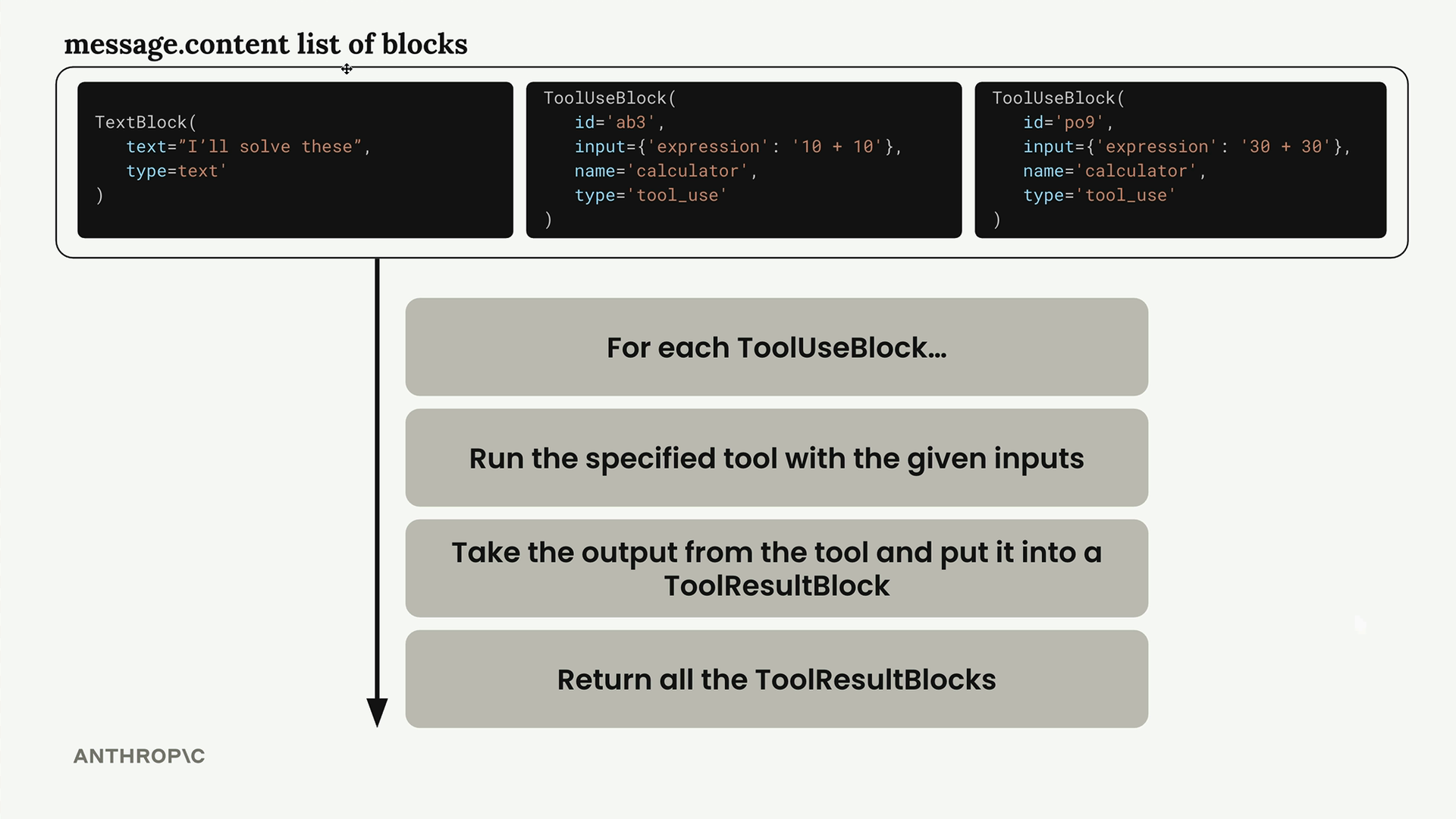
run_tools 函式會透過篩選出工具使用區塊並逐一處理來完成此任務:
python
def run_tools(message):
    tool_requests = [
        block for block in message.content if block.type == "tool_use"
    ]
    tool_result_blocks = []

    for tool_request in tool_requests:
        # 處理每個工具請求……
工具結果區塊
對於每個工具使用區塊,我們需要建立一個對應的工具結果區塊。這些區塊有特定的必要欄位:
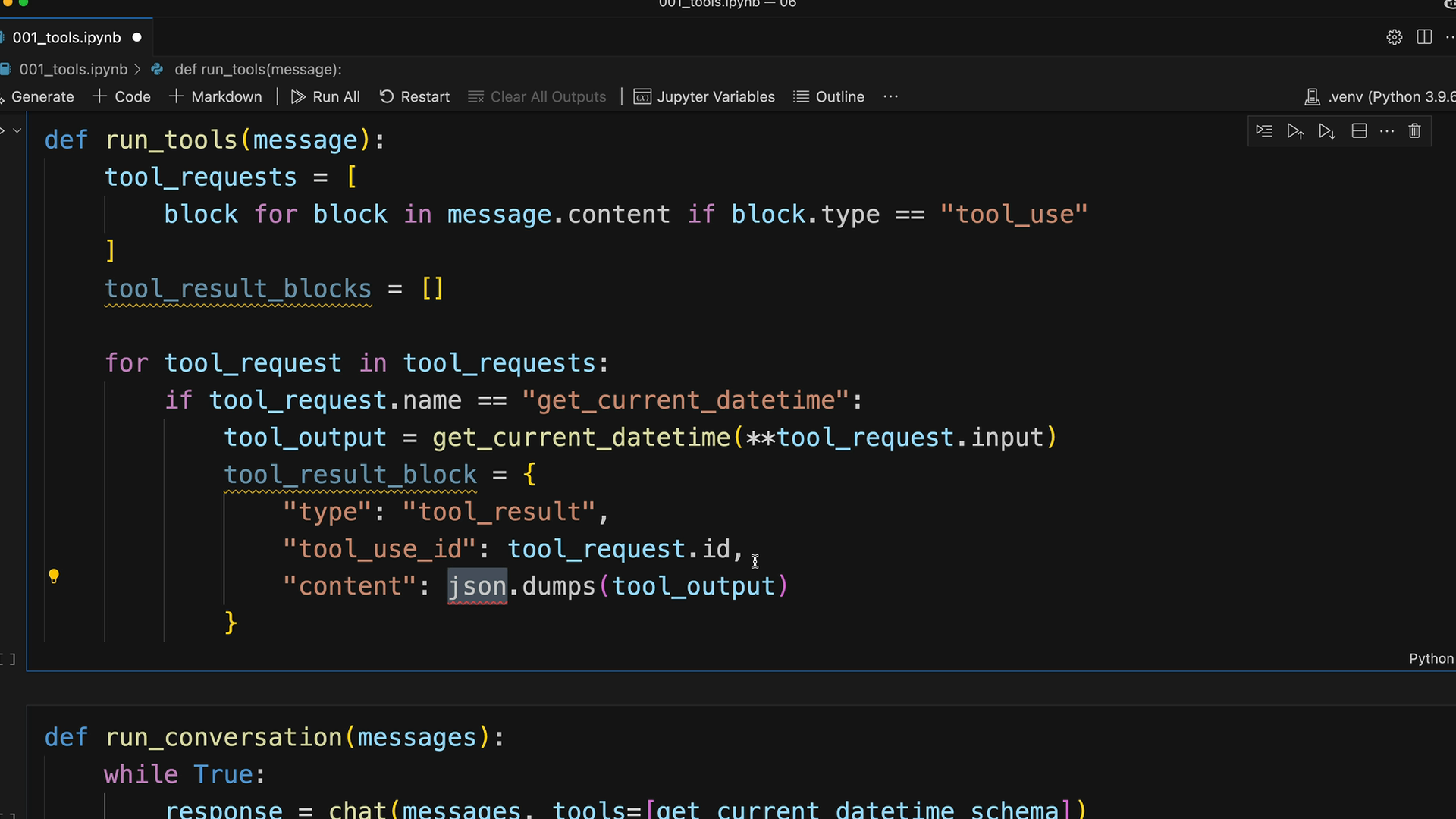
工具結果區塊必須包含與原始工具使用區塊相同的 ID,但要放在 tool_use_id 欄位中:
python
tool_result_block = {
    "type": "tool_result",
    "tool_use_id": tool_request.id,
    "content": json.dumps(tool_output),
    "is_error": False
}
錯誤處理
穩健的工具執行需要處理潛在的錯誤。當工具失敗時,我們仍然需要回傳一個工具結果區塊,但附上錯誤資訊:
python
try:
    tool_output = run_tool(tool_request.name, tool_request.input)
    tool_result_block = {
        "type": "tool_result",
        "tool_use_id": tool_request.id,
        "content": json.dumps(tool_output),
        "is_error": False
    }
except Exception as e:
    tool_result_block = {
        "type": "tool_result",
        "tool_use_id": tool_request.id,
        "content": f"Error: {e}",
        "is_error": True
    }
可擴充的工具路由
為了支援多個工具,請建立一個獨立的路由函式,而不是將工具名稱寫死:
python
def run_tool(tool_name, tool_input):
    if tool_name == "get_current_datetime":
        return get_current_datetime(**tool_input)
    elif tool_name == "other_tool":
        return other_tool_function(**tool_input)
    # 視需要新增更多工具
這種做法讓新增工具變得容易,而不需要修改核心對話邏輯。
完整工作流程
完整的多輪對話運作方式如下:
- 將使用者訊息連同可用工具一起傳送給 Claude
- Claude 以文字及/或工具使用區塊回應
- 執行任何被請求的工具並建立工具結果區塊
- 將工具結果以使用者訊息的形式傳回給 Claude
- 重複進行,直到 Claude 在不要求工具的情況下提供最終回應
這創造了一種無縫的體驗,讓 Claude 能夠在數個對話輪次中進行多次工具呼叫,以收集提供全面最終答案給使用者所需的所有資訊。